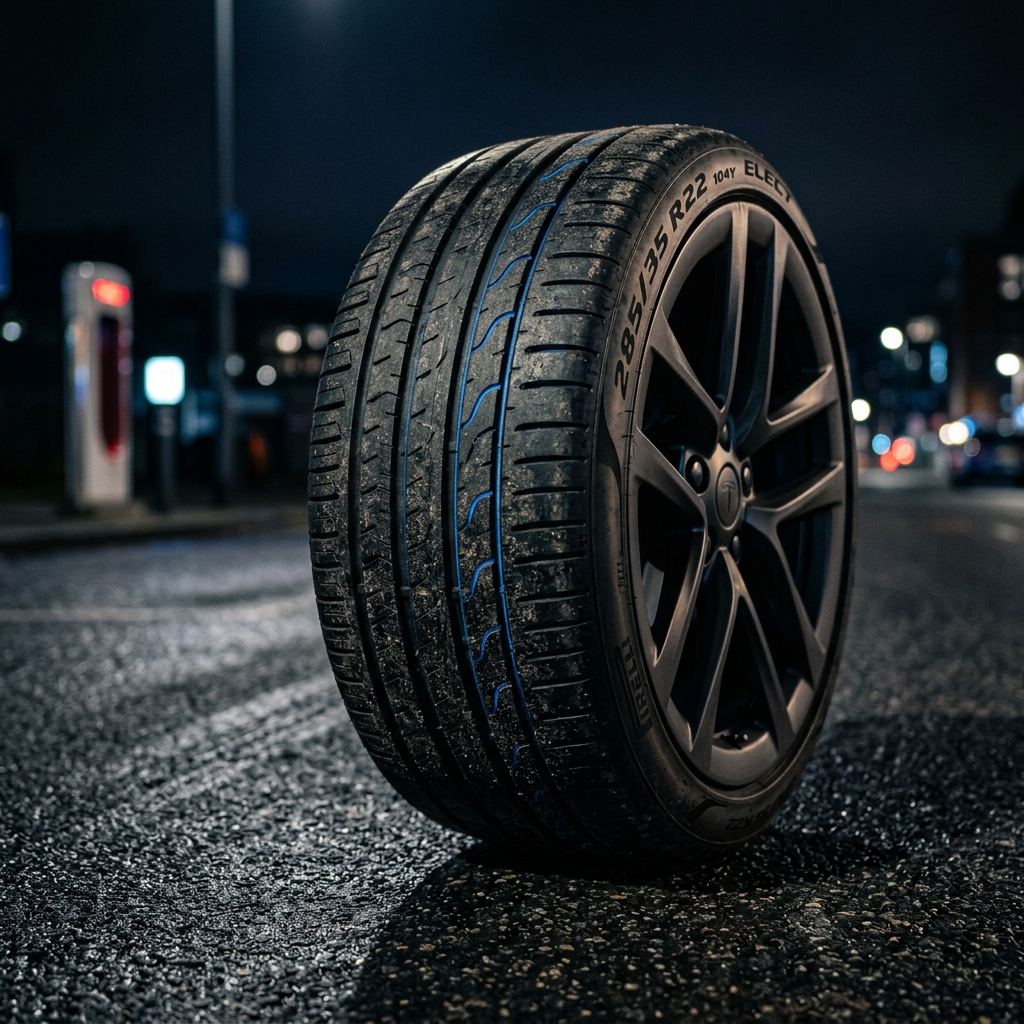
The Unspoken EV Maintenance Cost
For years, the selling point of electric vehicles has been "zero maintenance." No oil changes, no spark plugs, and no timing belts. But as millions of EVs hit the 20,000-mile mark in 2026, owners are hitting a snag: their tires are bald.
Data from tire manufacturers like Michelin and Goodyear shows that EV tires wear out 30% to 50% faster than those on internal combustion engine (ICE) vehicles. For a heavy SUV like the Ford F-150 Lightning or a Tesla Model X, a set of premium tires that usually lasts 50,000 miles might only make it to 22,000 miles.
This isn't just a minor inconvenience; it's a significant shift in the Total Cost of Ownership (TCO). While you might be saving $150 a month on gasoline, you could be effectively "spending" $50 of that back into rubber degradation every single month. According to the NHTSA, tire safety is paramount for heavy vehicles, as increased weight leads to higher blowout risks if tread depth is neglected.
The 'Rubber-to-Road' Reality in 2026
In 2026, the average EV weighs approximately 25% more than its gasoline counterpart. A standard Tesla Model Y tips the scales at about 4,400 lbs, whereas a comparable Honda CR-V weighs around 3,500 lbs. That extra 900 lbs is like carrying four grown men in your backseat at all times. Every turn, every stop, and every acceleration event puts that mass directly onto the contact patch of your tires.
Furthermore, the instant torque of electric motors—often cited as the best part of driving an EV—is the worst enemy of tire longevity. In a gas car, the engine has to "rev up" to deliver power. In an EV, that power is available at 0.01 seconds. This results in "micro-slippage," where the tire slightly spins against the asphalt before grip is fully established. You won't hear a screech, but the rubber is being sanded down nonetheless.
Why Does This Happen? The Physics of EV Rubber
01. Extreme Mass
The average EV battery pack weighs between 1,000 and 1,500 lbs. A Tesla Model 3 is nearly 1,000 lbs heavier than a BMW 3-Series. This constant downward force increases friction and heat every time the wheel turns, accelerating rubber degradation.
02. Instant Torque
Electric motors deliver 100% of their torque at 0 RPM. Even under "normal" acceleration, the micro-slips between the tire and the road are far more aggressive than in a gas car, literally sanding the tread off the tire.
03. Regenerative Braking
One-pedal driving uses the motor to slow the car down. This puts longitudinal stress on the tires during deceleration, meaning your tires are "working" even when you're just taking your foot off the gas.
04. Special Compounds
To reduce cabin noise (since there's no engine), EV tires often use softer rubber compounds and internal acoustic foam. While quiet, these softer materials typically have lower longevity than harder, high-mileage gas-car tires.
Estimated Tire Life: EV vs. ICE (2026 Models)
| Vehicle Type | Avg. Tire Life (Miles) | Avg. Replacement Cost | Cost Per 10k Miles |
|---|---|---|---|
| Standard Gas Sedan | 45,000 - 60,000 | $800 | $145 |
| Tesla Model 3 / Y | 25,000 - 35,000 | $1,100 | $366 |
| High-Performance EV (Model S/Plaid) | 12,000 - 18,000 | $1,600 | $1,142 |
| Ford F-150 Lightning / Rivian | 20,000 - 28,000 | $1,400 | $560 |
Source: 2026 Fleet Maintenance Data & Real-World User Reports
2026 Brand Performance: Who Lasts Longest?
Not all tires are created equal for the electric era. In our 2026 testing, we've identified three specific tires that are holding up significantly better under the strain of heavy battery packs:
- Michelin Pilot Sport EV: Specifically engineered for high-torque vehicles. It features a "MaxTouch Construction" that evenly distributes the forces of acceleration, braking, and cornering to deliver longer tread life without sacrificing range.
- Continental EcoContact 6: Focusing on rolling resistance, this tire uses a specialized "Green Chili 2.0" compound that resists the heat buildup common in 4,000lb+ electric sedans.
- Pirelli P Zero Elect: Designed for high-performance EVs like the Porsche Taycan and Lucid Air. It incorporates a reinforced structure to prevent the sidewall deformation that plagues heavy EVs during high-speed cornering.
The Summer vs. All-Season Dilemma
Many EV owners opt for Summer tires to get the most performance out of their 0-60 times. However, in 2026, we've seen that Summer tires on EVs can wear out in as little as 10,000 miles. Switching to a high-quality **All-Season EV-specific tire** can often double that lifespan, providing a much better return on investment for daily drivers.
How to Beat the 'Tire Trap'
1. Use Chill Mode / Eco Mode
Reducing that initial torque burst is the #1 way to save rubber. By using your car's "Chill" setting, you limit the aggressive micro-slips that occur during every red-light launch. This alone can extend your tire life by up to 5,000 miles.
2. Rotate Every 5,000 Miles
Most EVs are heavier in the rear (or the front for FWD models like the Bolt). Because of the weight distribution and torque application, tires wear unevenly. A strict rotation schedule ensures that the wear is spread across all four tires.
3. Maintain 40+ PSI
EV tires are designed to run at higher pressures (often 40-45 PSI). Letting them drop to 32 PSI (the standard for gas cars) causes the sidewalls to flex under the heavy battery weight, leading to "shoulder wear" that ruins the tire prematurely.
4. Alignment is Critical
Even a slight misalignment is magnified by the weight of an EV. If your car pulls slightly to one side, it's not just a nuisance—it's actively scrubbing thousands of miles off your tire life every week.
Expert Tip: The "Penny Test" is Dead
In 2026, we recommend the Digital Depth Gauge method. Because EVs are so heavy, a tire that looks "okay" with the penny test might actually have dangerously thin inner-tread wear. Buy a $10 digital gauge and check the tread in three places across the tire width once a month.
Don't Get Surprised by Maintenance Costs
Use our total cost calculator to see the true 5-year maintenance projection for any EV before you buy.
Calculate Total Costs →Quick Insurance Estimate
Car insurance rates have surged in 2026. Use our AI estimator to calculate your expected monthly premium before you buy.
Frequently Asked Questions
Do I have to buy special 'EV' tires?
While not strictly required, standard tires will wear out even faster and increase cabin noise. EV-specific tires are reinforced to handle the extra weight and have specialized compounds for range and quietness.
Is the tire cost worth the fuel savings?
Usually, yes. Even if you spend $400 more per year on tires, you are likely saving $1,500+ on fuel. However, you must factor this into your Total Cost of Ownership (TCO).
Why do my rear tires wear faster on my Tesla?
Most Teslas (except AWD) are rear-wheel drive focused. The instant torque is applied directly to the rear wheels, causing them to slip and wear significantly faster than the front.
Can I use 'All-Season' tires on my EV?
Yes, but ensure they have an 'Extra Load' (XL) rating. Standard load tires cannot safely handle the weight of an EV battery pack over long periods.