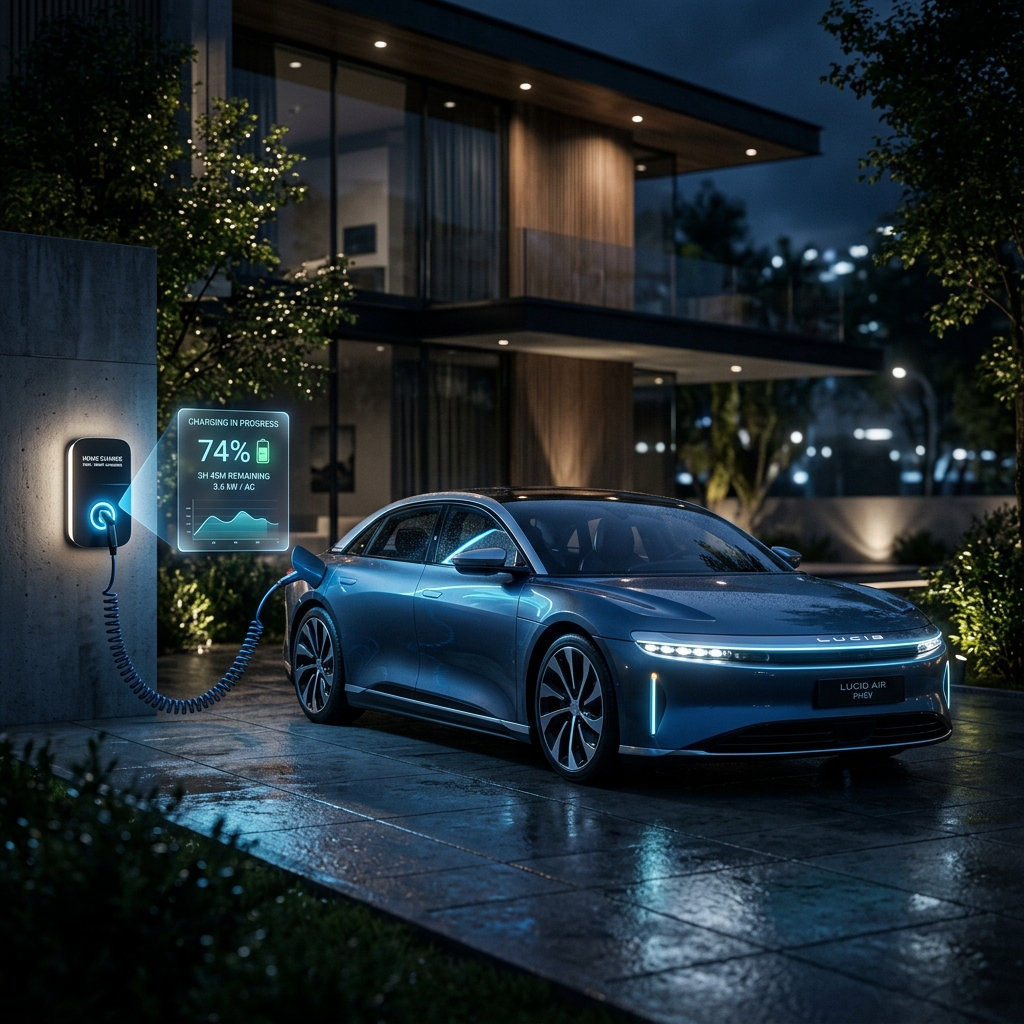
PHEV vs
Hybrid
Is the $5,000 "Plug-in Premium" actually worth it? We analyzed 2026 gas prices, electricity rates, and tax credits to find your true breakeven point.
$4,800
Avg. Price Premium
42 Miles
Avg. EV Range
3.2 Yrs
Avg. Payback Period
Beyond the MSRP: Understanding the 2026 Landscape
In 2026, the automotive market has reached a critical inflection point. As battery costs have stabilized around $100/kWh, the gap between internal combustion engines (ICE), standard Hybrids (HEV), and Plug-in Hybrids (PHEV) has shifted. While many consumers view PHEVs as the "best of both worlds," the reality is often more nuanced when you factor in the Total Cost of Ownership (TCO) over a standard 5-year financing term.
The fundamental question is whether the electric-only range—typically between 30 and 50 miles for modern 2026 models—offsets the higher purchase price and the complexity of maintaining two distinct powertrains. In this deep-dive, we break down the chemistry, the climate impact, and the cold hard cash required to keep these vehicles on the road.
When to buy a Hybrid
- Lack of Charging Access: If you live in an apartment or park on the street, the "plug-in" part of the PHEV becomes a liability rather than an asset. A hybrid recharges itself via regenerative braking and the engine, requiring zero infrastructure.
- High Highway Mileage: Hybrids are often lighter and more aerodynamic than their PHEV counterparts. On long highway hauls (over 100 miles), a standard hybrid like the Prius often outperforms the Prius Prime in raw MPG once the battery is depleted.
- Lower Purchase Price: With a price difference of $4,000 to $8,000, a standard hybrid offers an immediate cash-flow advantage, especially in a high-interest-rate environment.
When to buy a PHEV
- Short Commutes + Home Charging: If your daily round-trip is 35 miles and you can plug in every night, you will effectively never use gasoline for your daily life. This is the "EV lifestyle" with a "Gas safety net."
- Incentive Eligibility: In 2026, federal tax credits and state rebates (like those in CA, NY, and WA) can slash the PHEV premium by 50-100%, making the "upgraded" version nearly free.
- Performance Boost: Most PHEVs (like the RAV4 Prime) use their larger electric motors to provide significant horsepower boosts. If you want 300hp+ in a family SUV, the PHEV is the logical choice.
The PHEV
ROI Matcher
Enter your driving habits to see if the gas savings cover the higher monthly payment of a Plug-in Hybrid. Our model accounts for 2026 energy inflation.
Estimated Annual Savings
$303
PHEV vs. Standard Hybrid
*Based on $5,000 price premium, 40-mile EV range, and $0.15/kWh electricity rates.
The 2026 Battery Chemistry Battle: LFP vs NMC
One of the most overlooked factors in the PHEV vs. Hybrid debate is battery chemistry. In 2026, most standard hybrids use small, lightweight Lithium-Iron Phosphate (LFP) batteries. These are incredibly durable and can handle thousands of cycles but have lower energy density.
Plug-in Hybrids, needing higher range in a compact space, typically utilize Nickel Manganese Cobalt (NMC) chemistry. While this provides the 40+ mile range consumers crave, NMC batteries are more sensitive to "deep discharges" and extreme heat. For a PHEV owner, this means that consistently running the battery to 0% and then charging it in a hot garage can lead to faster degradation than the small battery in a standard hybrid.
The Winter Range Reality Check
Electric range is not a constant. In 2026, we have seen that PHEVs lose significantly more "usability" in winter than standard hybrids. Because a PHEV relies on an electric heater (heat pump or resistance), a 40-mile range often drops to 22 miles when the temperature hits 20°F (-6°C).
40 mi
Ideal (70°F)
28 mi
Cold (40°F)
19 mi
Freezing (0°F)
Depreciation Forecasts: 2026-2031
Our AI-driven valuation models suggest that standard hybrids will retain 62% of their value after 5 years, while PHEVs may lag at 54%. The reason? Battery anxiety in the used market. A second-hand buyer is often wary of a 5-year-old plug-in battery that may have been poorly managed, whereas the smaller hybrid battery is seen as a lower-risk component.
However, this trend is reversed for luxury brands like BMW and Volvo, where PHEV variants are the "entry-level" into the electric lifestyle and hold a premium over base gas models.
The 2026 Comparison Matrix
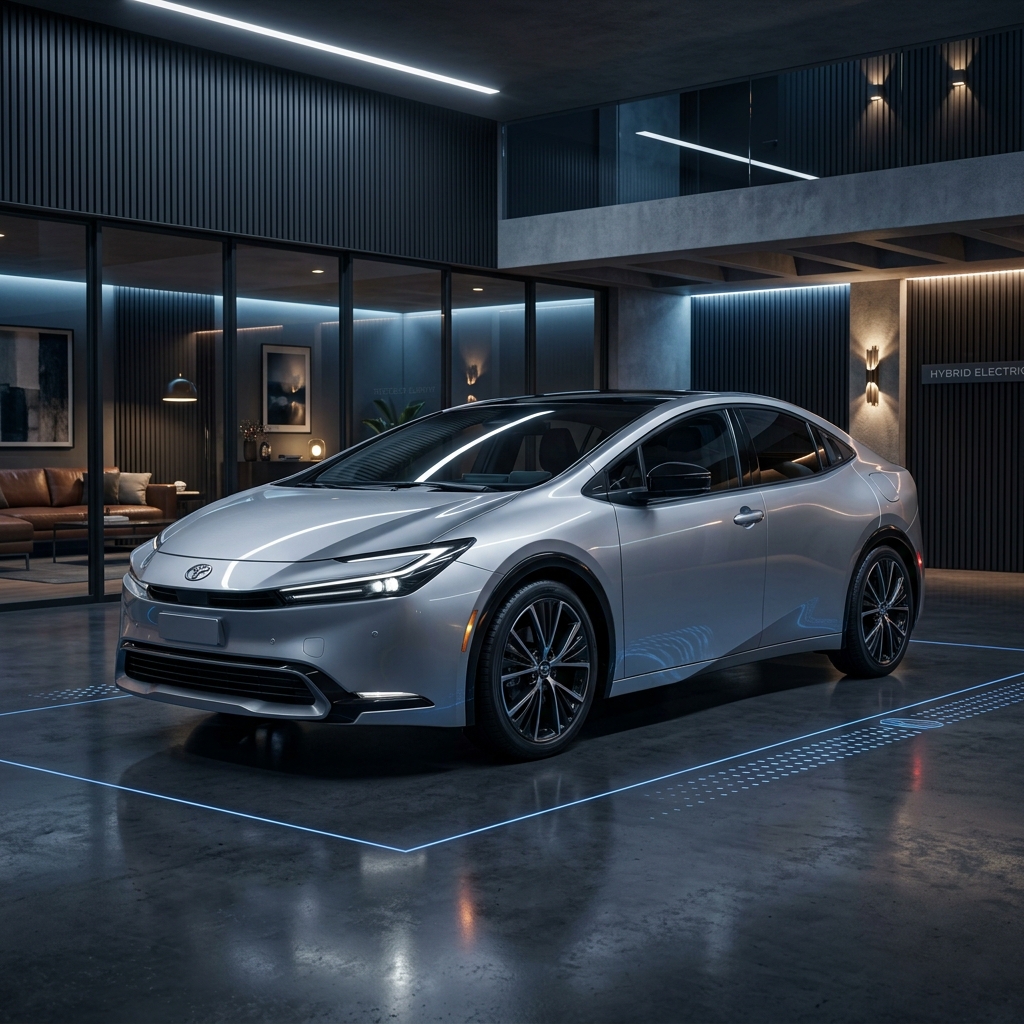
Toyota Prius / Prime
Hybrid (HEV)
Plug-in (PHEV)
Verdict
The Prime is a winner if you have a short commute and want 220hp performance.

Toyota RAV4 / Prime
Hybrid (HEV)
Plug-in (PHEV)
Verdict
Tough sell. $11k premium takes over 8 years to break even on gas alone.
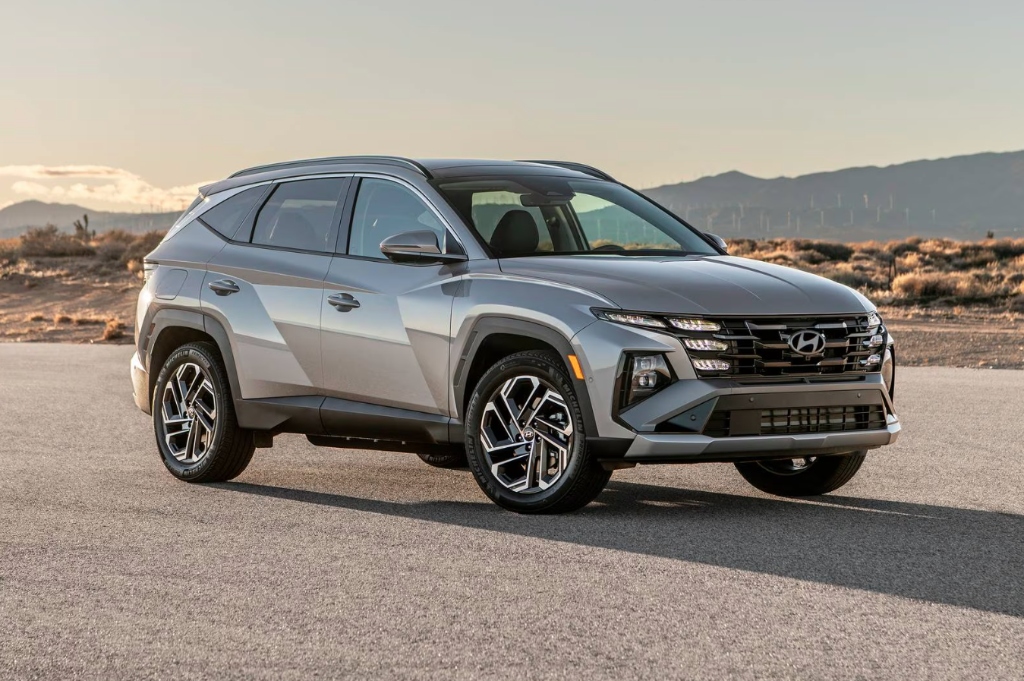
Hyundai Tucson / PHEV
Hybrid (HEV)
Plug-in (PHEV)
Verdict
Great lease candidate due to EV tax pass-through credits.
The Hidden Costs
of "Going Plug-in"
01. The Tire Decay
Weight Penalty
02. Maintenance of
Two Powertrains
03. Electricity vs
Gas Volatility
The 2026 PHEV Technical Standard
Charging Infrastructure
Most 2026 PHEVs have transitioned to the NACS (Tesla-style) port as standard. While they cannot use Tesla Superchargers (which only support DC), they can use all Destination Chargers and home units. On-board chargers have also improved, with many models supporting 6.6kW or 11kW Level 2 charging, allowing a full 40-mile charge in under 2 hours.
Regenerative Braking 2.0
Hybrids and PHEVs in 2026 now feature "One-Pedal Driving" modes previously reserved for pure EVs. This significantly reduces brake pad wear, with some owners reporting original pads lasting over 150,000 miles. This is a massive long-term maintenance credit that offset the initial purchase price gap.
PHEV vs Hybrid FAQ
Can I drive a PHEV if the battery is empty?
Yes. When the battery is "empty," the car functions exactly like a standard hybrid. The system maintains a small buffer to ensure the electric motor can still assist with acceleration and regenerative braking. You will never be stranded as long as you have gas in the tank.
Do PHEVs qualify for the $7,500 tax credit in 2026?
The 2026 tax landscape is complex. Most PHEVs qualify for a partial credit of $3,750 based on battery capacity. However, American-made models like the Ford Escape PHEV or Jeep 4xe models may qualify for the full $7,500 if their battery minerals meet the "Sourcing Requirements" of the updated Inflation Reduction Act.
Is insurance more expensive for a Plug-in Hybrid?
On average, yes. Insurance companies often charge 10-15% more for a PHEV than the equivalent hybrid because of the higher replacement cost of the larger battery pack and the increased weight, which can cause more damage in an accident. Always get an insurance quote before upgrading to a PHEV.
What happens if I never plug in my PHEV?
If you never plug in, you are essentially driving a heavier, more expensive standard hybrid. You will still get good fuel economy, but it will likely be slightly lower than the dedicated hybrid version of the same car because you are carrying around several hundred pounds of unused battery weight.
Quick Insurance Estimate
Car insurance rates have surged in 2026. Use our AI estimator to calculate your expected monthly premium before you buy.
Ready to math it out?
The difference between a smart investment and a $5,000 mistake is just one calculation. Use our full ownership tool for a precision report.